Where khaddar comes from
Khaddar and the Indian word khadi share a root, and both first meant cloth spun and woven by hand. In the 1920s Gandhi made hand-spun khadi a symbol of India's independence movement, urging people to wear it instead of imported mill cloth.
The two words have since drifted apart. In India, khadi still usually means handloom fabric. In Pakistan, khaddar now means a thick winter weave, usually machine-made, that brands print, dye and embroider for their fall and winter collections. It is mostly cotton, though some labels use cotton blends under the same name.
What khaddar feels like
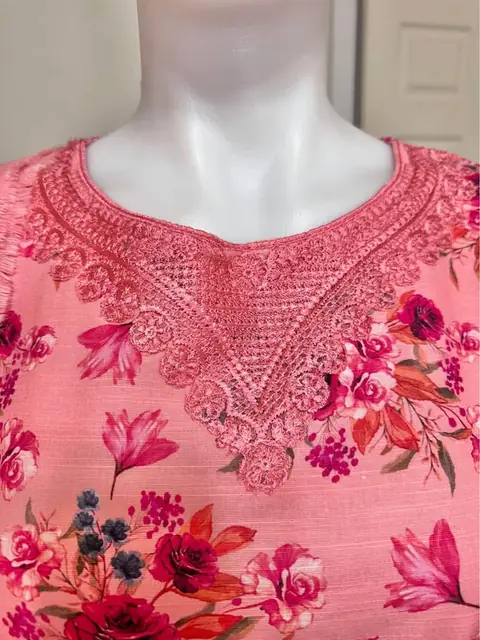
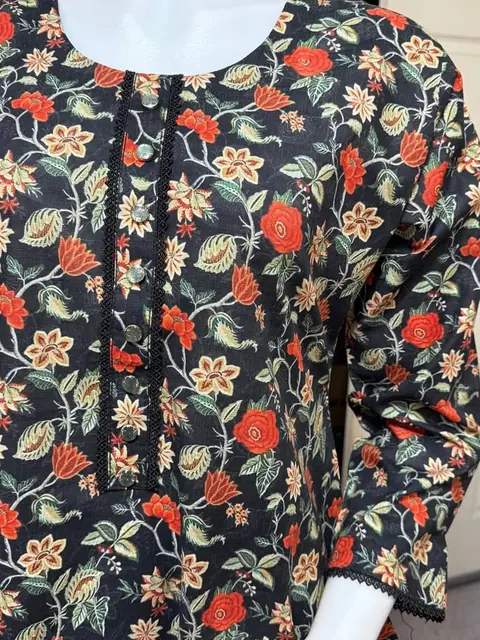
The first thing you notice is the weight. Khaddar is woven from thicker yarn than lawn or everyday cotton, so it feels substantial in your hand, with a matte, slightly grainy surface you can see even in photos.
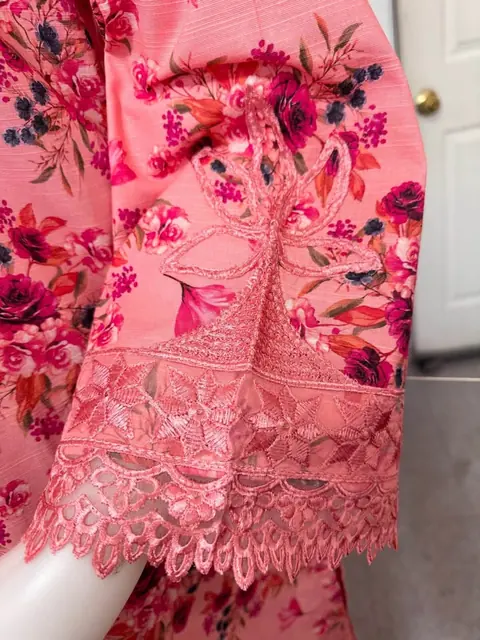
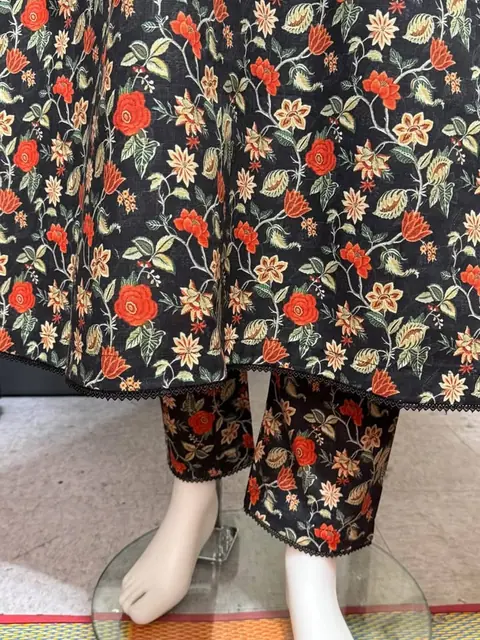
That body changes how a suit sits. Khaddar holds its shape instead of clinging, so a straight shirt keeps a clean line and a long maxi hangs straight down. It is opaque, so pale prints need nothing underneath. Prints look a little softer on its textured surface than on smooth lawn, and thread embroidery stands out well against it. Because it is cotton, it also breathes, so you stay comfortable through a long evening in a heated living room.
Khaddar vs lawn vs linen vs cotton
All four turn up in Pakistani suits, and the names alone don't tell you how thick a piece is. The pair people mix up most is khaddar and linen, because both arrive with the fall collections. Khaddar looks grainy and feels thick and soft; linen is flatter and crisper and creases more. For real cold, khaddar is the warmer of the two, while linen suits a mild October day or an office that runs warm.
| Fabric | Thickness and feel | See-through? | When to wear it |
|---|---|---|---|
| Khaddar | Thick, textured, soft and matte | No, even in pale colors | November to early March |
| Lawn | Thin, fine and smooth | Pale lawn can be in bright light | May to September |
| Linen | Medium, flatter and crisper, creases easily | Rarely | October, April and mild winter days |
| Cotton | Light to medium, soft | Thin white cotton can be | Most of the year |
How to wear khaddar through a US winter
Khaddar is warm for a fabric, but it isn't a coat. In heated homes, offices and banquet halls it is comfortable on its own, so treat it as your indoor layer and plan for the walk in between. For thermals, cardigans and boots, the winter kurti guide has more ideas.
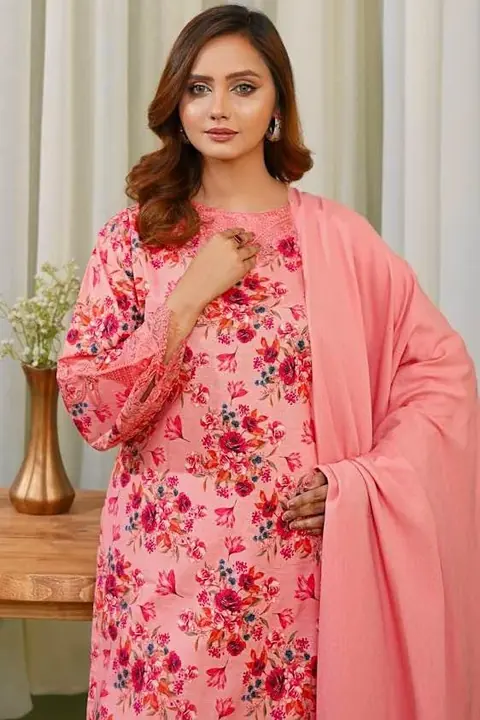
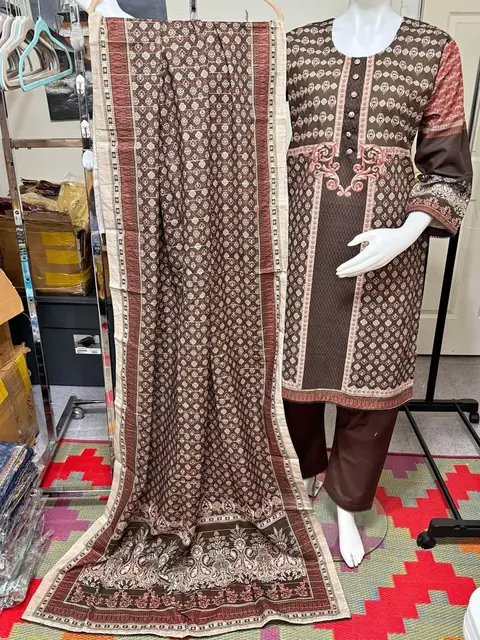
- Use the shawl. Pakistani khaddar 3-piece suits often come with a shawl instead of a light dupatta. Wear it over your shoulders indoors and wrap it like a scarf outside.
- Mind the hem in slush. Khaddar soaks up water and stays cold and heavy when wet, so on snowy days wear ankle-length trousers or tuck a shalwar into boots, and keep floor-length maxis for dry days.
- Go darker at the hem. Brown, black and deep floral prints hide road salt and splashes better than pastels.
- Wear it to winter events. A khaddar suit is smart enough for the office, a dawat or an Eid that falls in late winter, as Eid al-Fitr will for the next few years.
Caring for khaddar
Khaddar is sturdy, but its weight and deep winter dyes need a little attention.
- Wash a new, deeply dyed piece on its own in cold water for the first wash or two, in case the color runs.
- Skip the hot dryer, which is what shrinks cotton. Air-dry it, or use the lowest setting and take it out while it is slightly damp.
- Dry the shirt flat or on a wide hanger. Wet khaddar is heavy, and a thin line or a clip can pull it out of shape.
- Remove pilling. Spots that rub, like under the arms or a bag strap, can pill; a fabric shaver used lightly takes the bobbles off.
- Use plenty of steam. Iron on the cotton setting, on the reverse side over any embroidery, while the fabric is still a little damp.
Buying a khaddar suit online
Thickness is the hardest thing to judge from a photo, so ask for a video: you can see how the fabric moves and how much light comes through it. Compare the chest and hips with a winter suit you already own, and leave a little room if you plan to wear a thermal underneath.
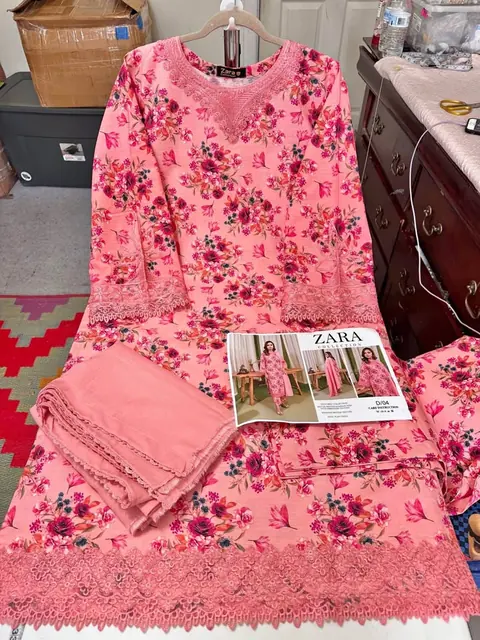
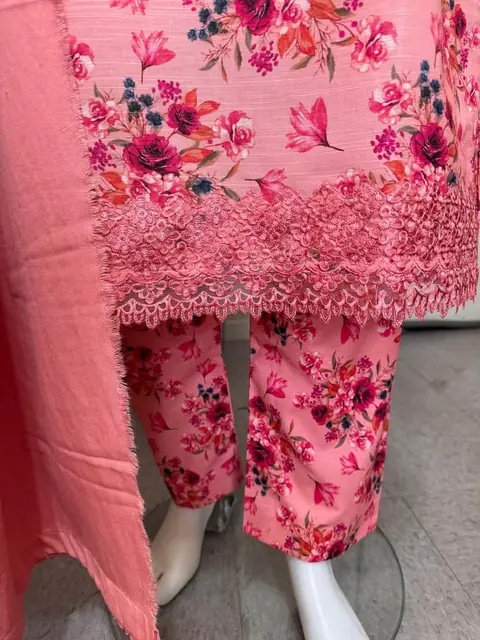
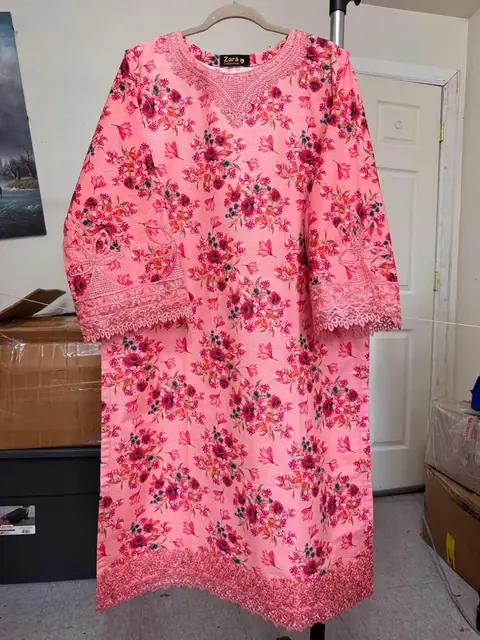
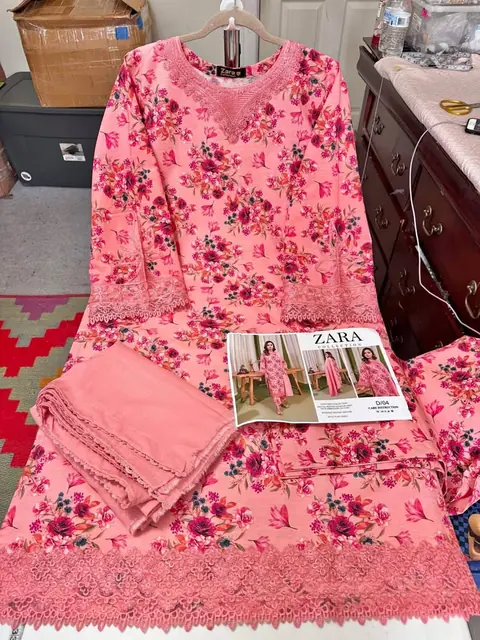
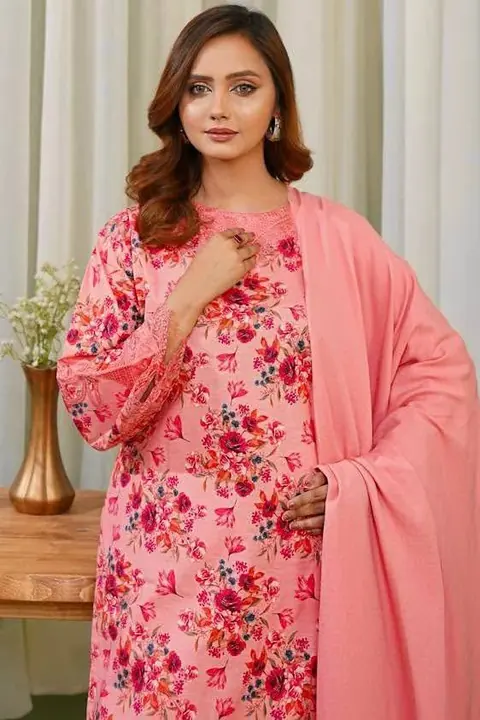
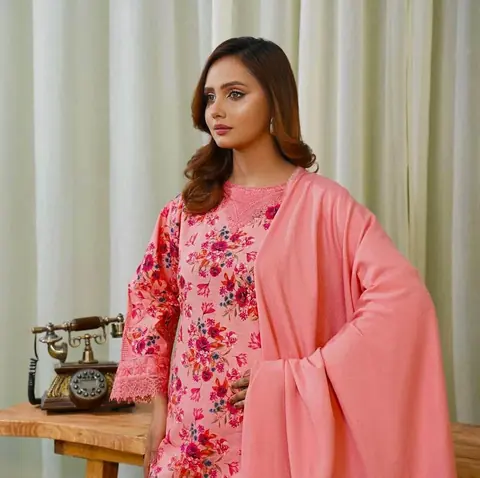
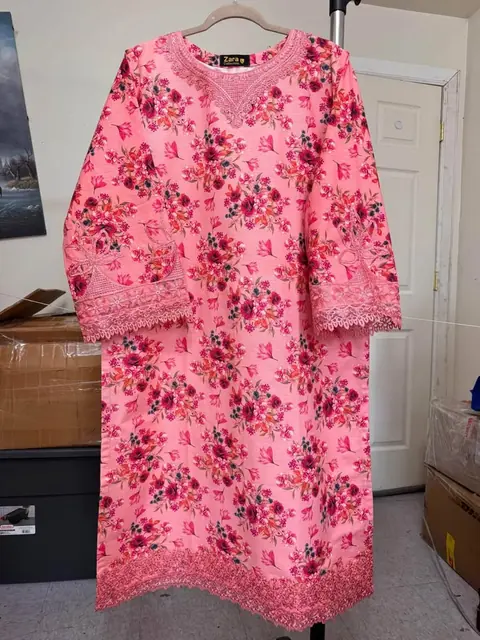
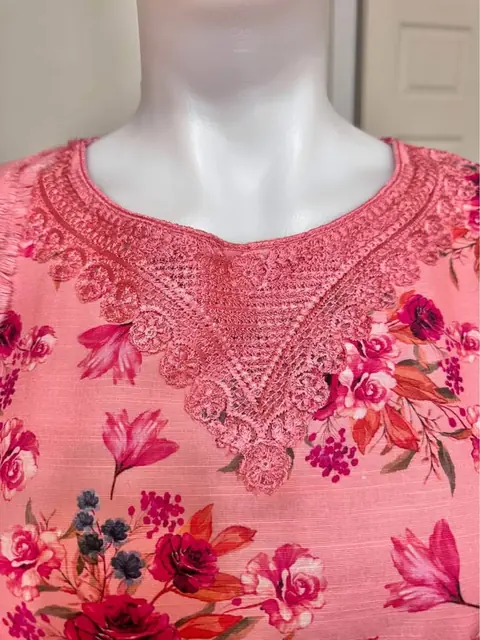
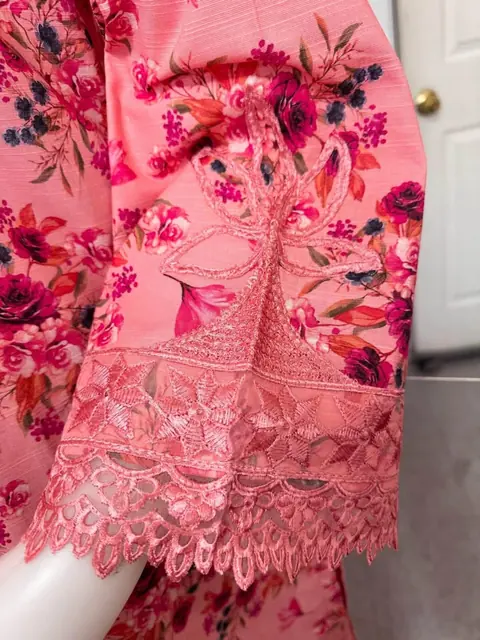
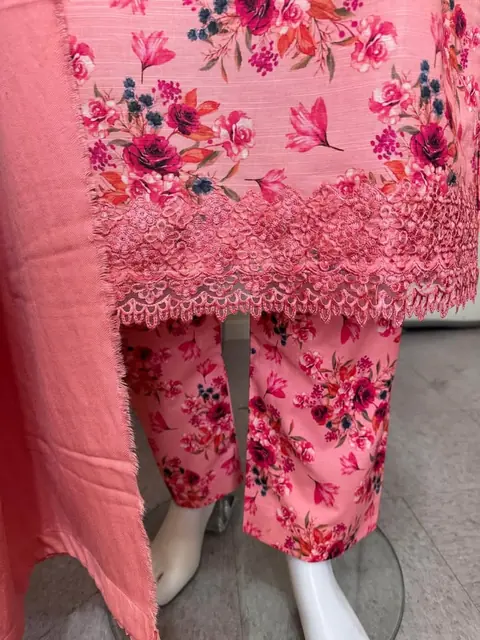
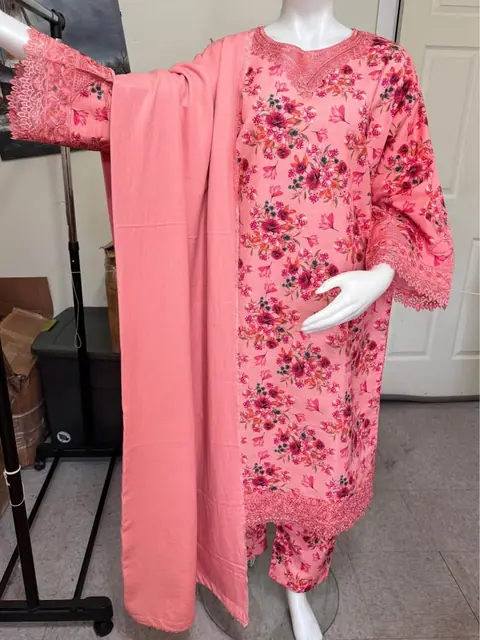
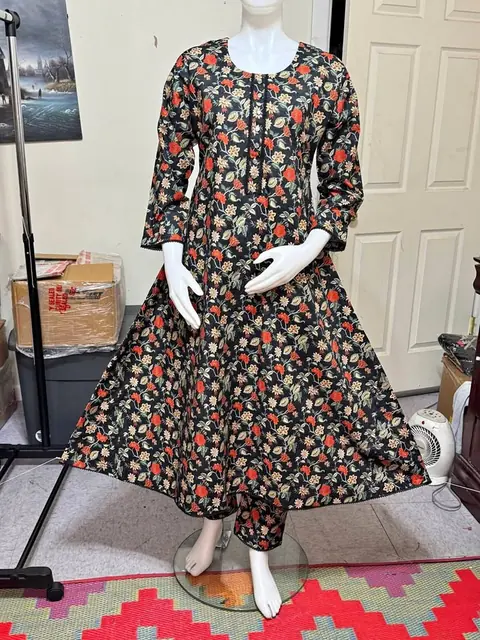
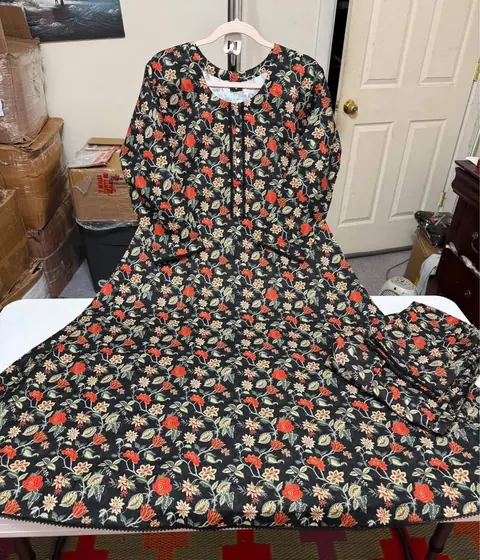
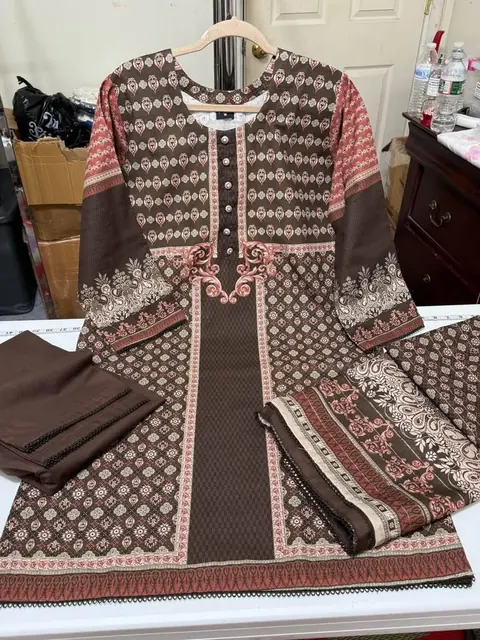
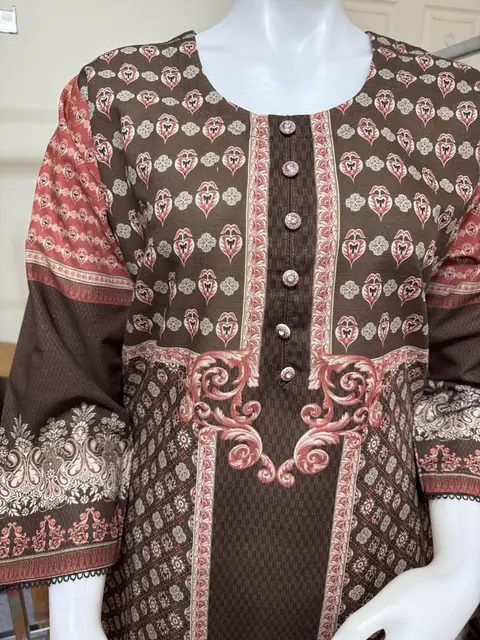
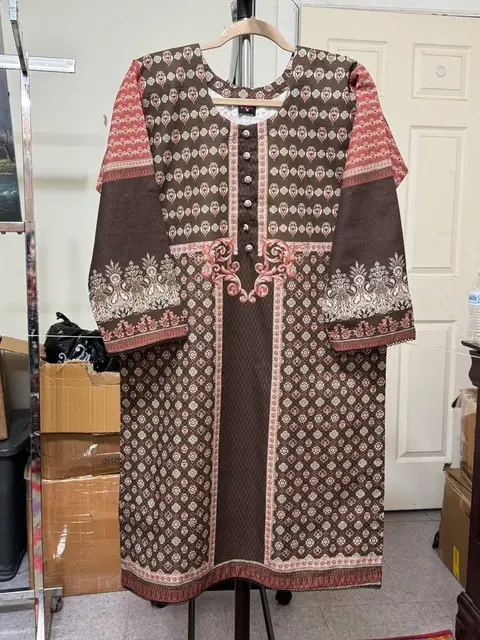
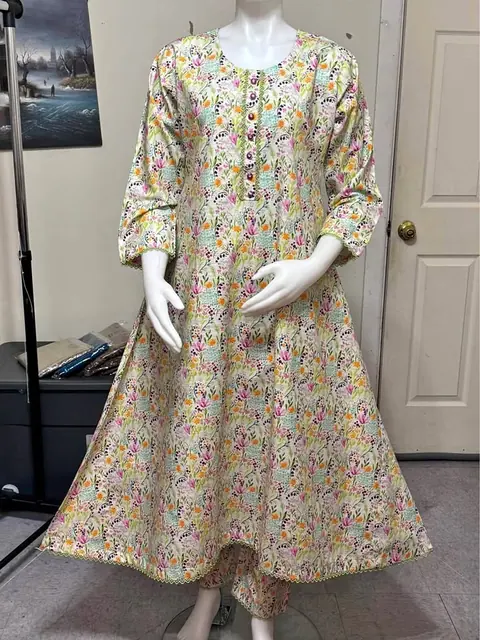
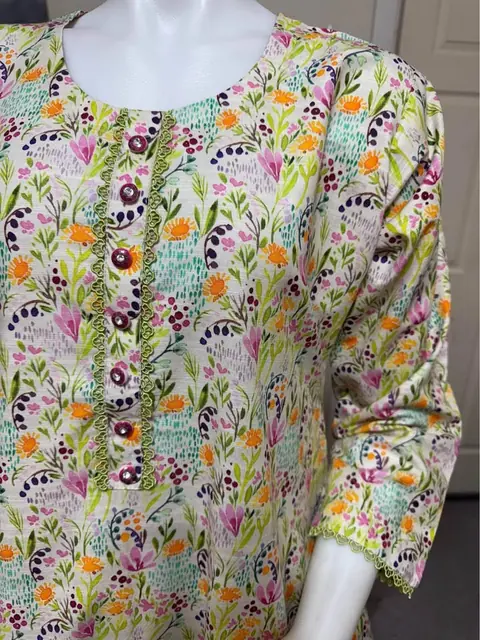
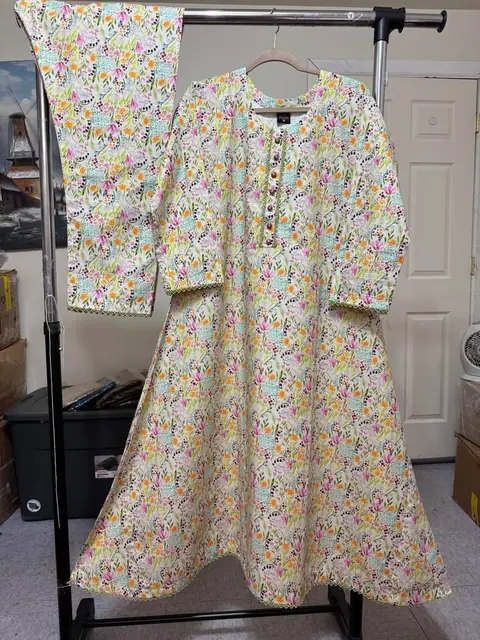
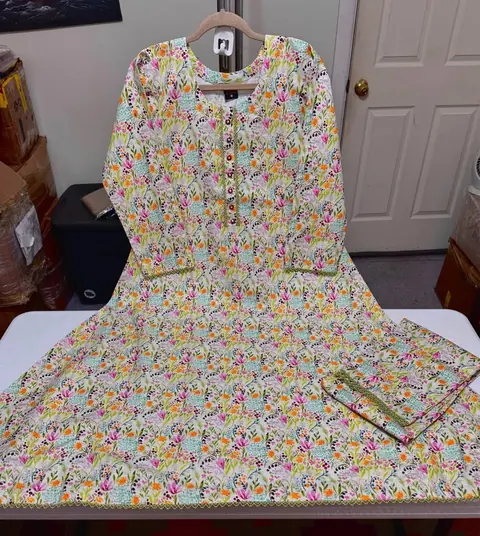
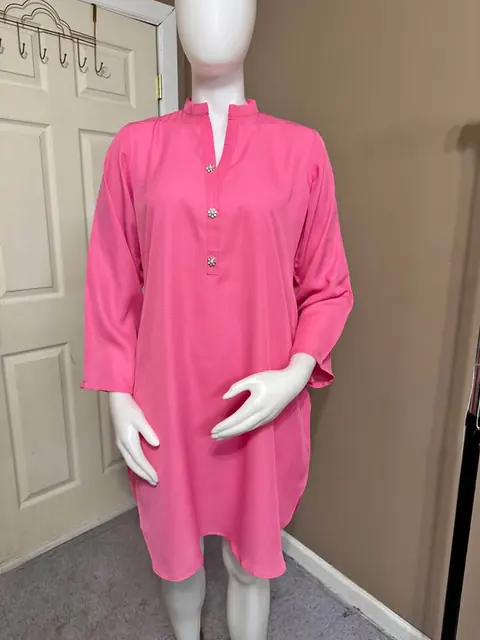
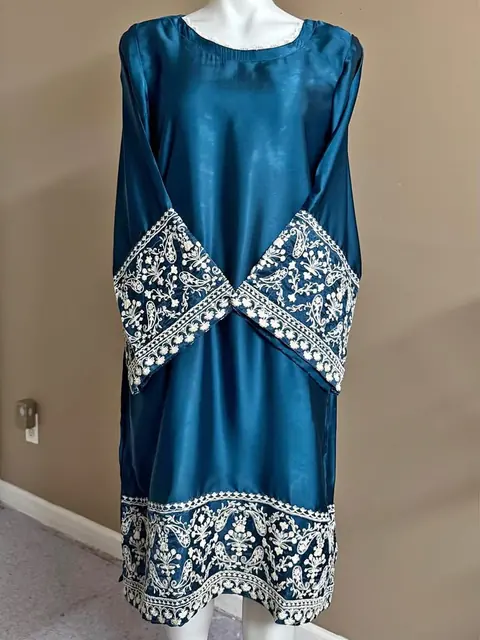
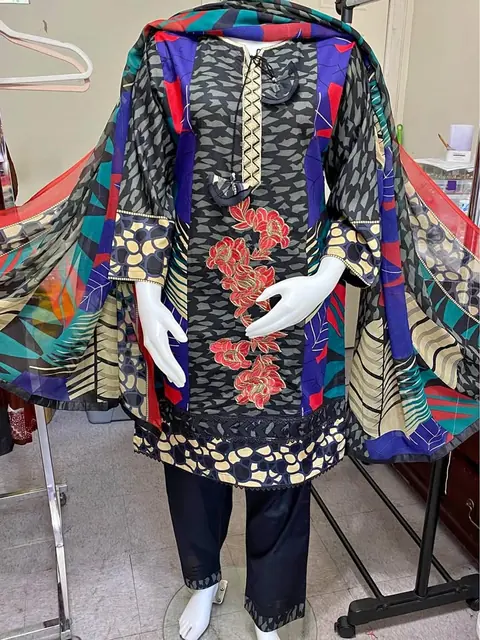
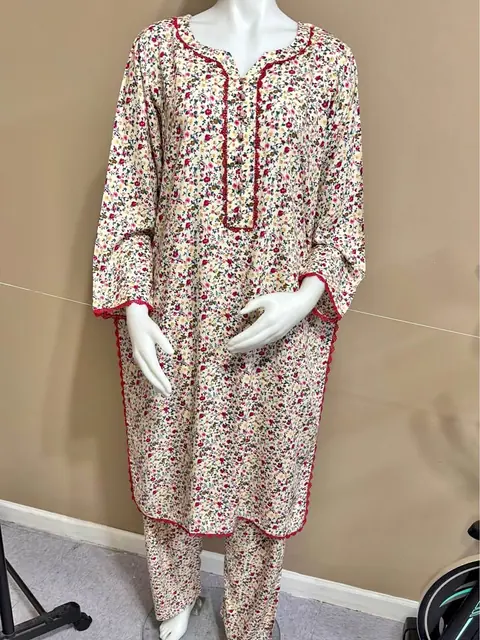
The khaddar pieces in this shop are branded Pakistani suits and maxi dresses, from a brown 3-piece with lace work on the neck, sleeves and dupatta border to pink floral embroidered suits and a Bin Saeed 2-piece maxi. They run from 40 to 49 inches long, and each lists its size and its own chest, hips and length. Shagufta can send a video or extra photos on WhatsApp before you order.
Shop the pieces
Updated October 2026