What is chikankari?
Chikankari, also called chikan work or Lucknowi embroidery, is a traditional hand embroidery from Lucknow, the capital of Uttar Pradesh. It grew up around the Mughal courts several centuries ago, and popular stories link it to Empress Nur Jahan. The word chikan is often said to come from a Persian word for embroidery.
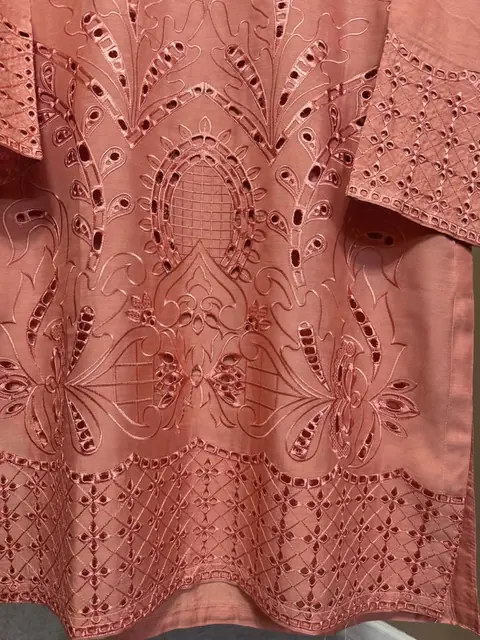
Traditionally it was white thread on fine white cotton muslin, and that look is still the classic. Today you will find chikankari on cotton, georgette, chiffon, viscose and other fabrics, in pastel and bright colors, sometimes with sequins, mirrors or pearls added. Lucknow chikan work has a Geographical Indication (GI) tag in India, which protects the name for work made in the Lucknow region.
The craft is still done largely by women working at home in Lucknow and the villages around it, and one garment passes through several hands: someone carves the wooden print blocks, someone prints the pattern, the embroiderers work the stitches, and a washer cleans and finishes the piece. That is why fully hand-made chikankari is treasured and kept for years.
The stitches that make chikankari
Chikankari uses around thirty stitches, but a handful do most of the work. Knowing them helps you read a piece:
- Tepchi: a long running stitch used for outlines, stems and vines.
- Bakhia, or shadow work: the thread crosses on the back of sheer fabric, so from the front you see a soft, shadowed petal outlined by tiny stitches.
- Phanda and murri: small raised knots, like grains of millet or rice, that fill flower centers.
- Jaali: open, net-like work made by easing the threads of the fabric apart without cutting it.
How to recognize hand chikankari
Hand chikankari is slow work. The design is first printed on the fabric in a washable blue ink, embroidered by hand, then washed to remove the print. Real hand work usually shows a few signs:
- Small irregularities: stitches vary a little in length and spacing, while perfectly identical flowers point to a machine.
- A tidy back with small knots and short thread ends, not a continuous web of thread or a stiff backing.
- Shadow work that looks soft and slightly opaque from the front, with the crossed threads visible on the reverse. Hold it up to a window and the petals glow.
- Raised knots you can feel with a fingertip.
- A higher price, because a fully hand-worked kurti can take days or weeks to finish.
Machine chikankari and what Shagufta sells
Machine-embroidered kurtis in the chikankari style are very common, and there is nothing wrong with them: they cost less, are usually easier to care for and look pretty from a few feet away. It just helps to know which one you are buying and to pay the right price for it.
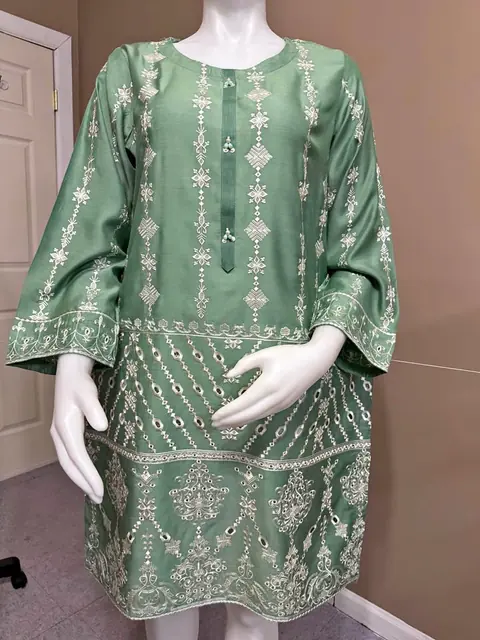
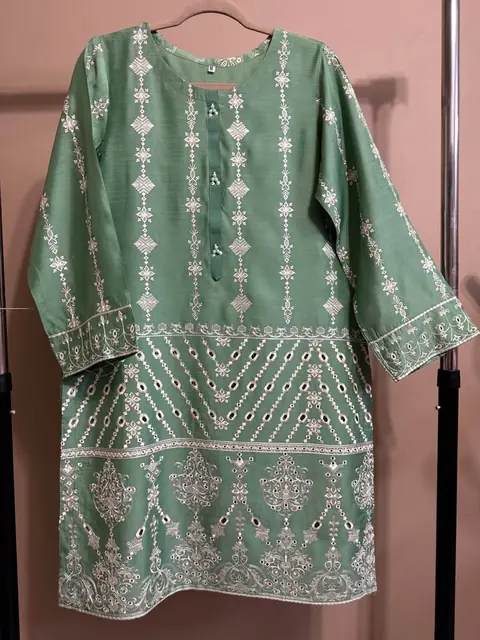
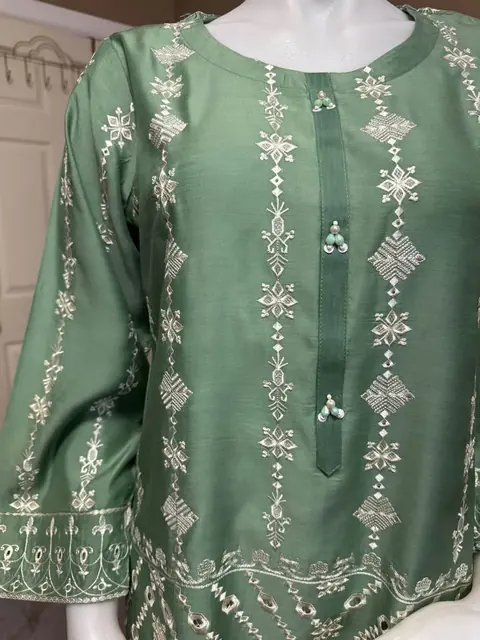
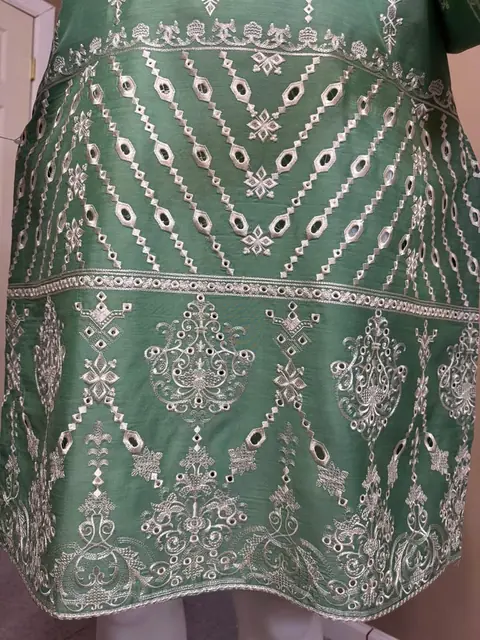
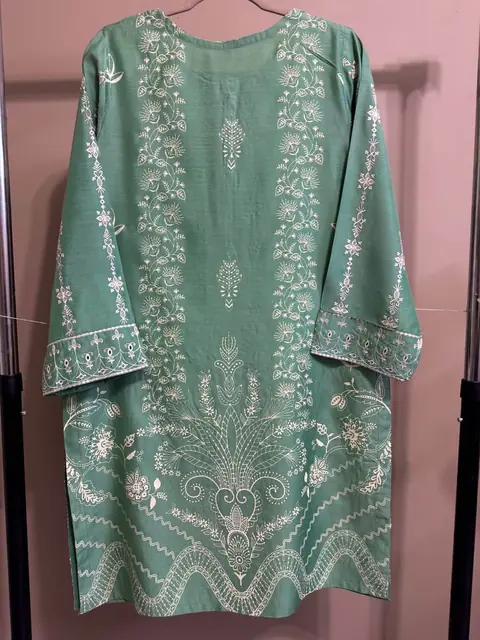
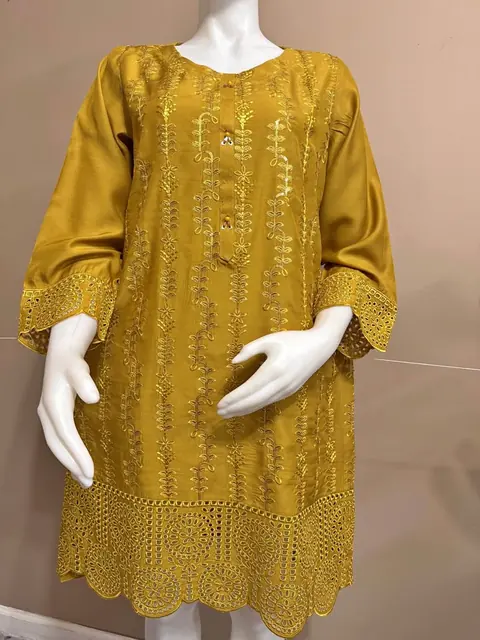
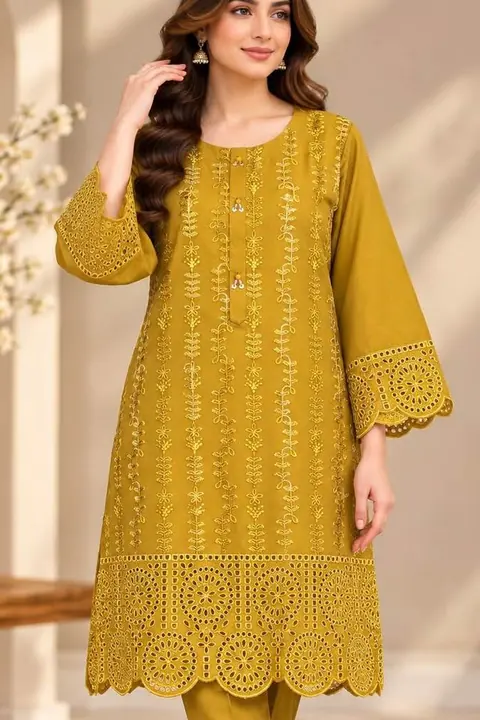
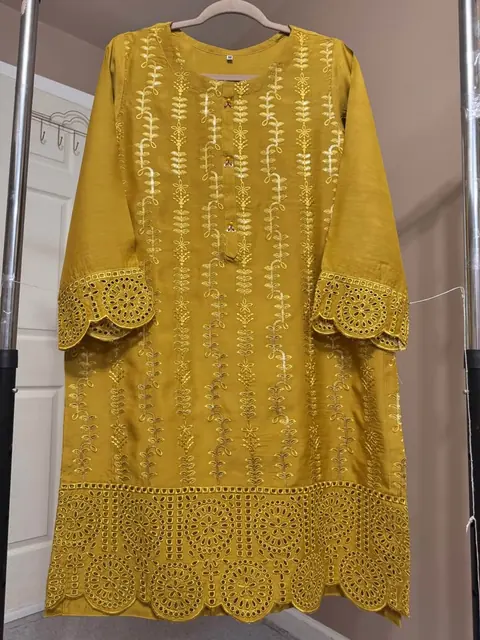
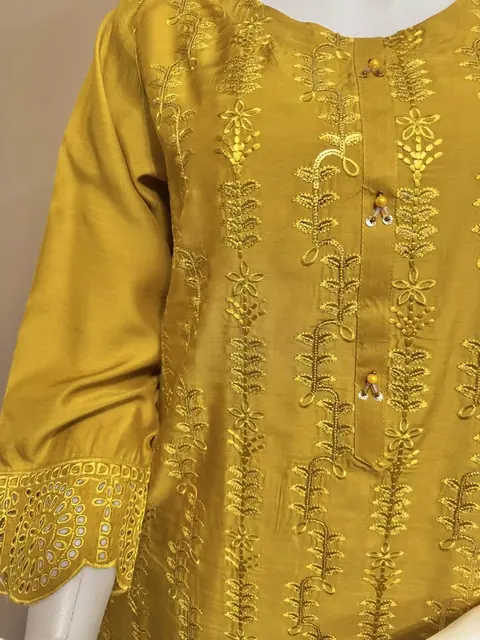
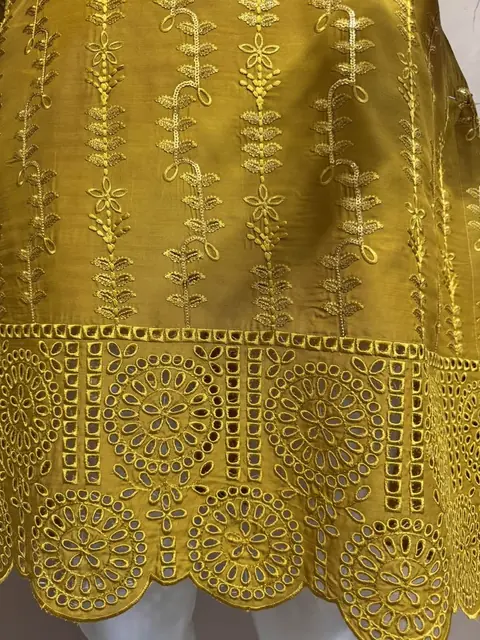
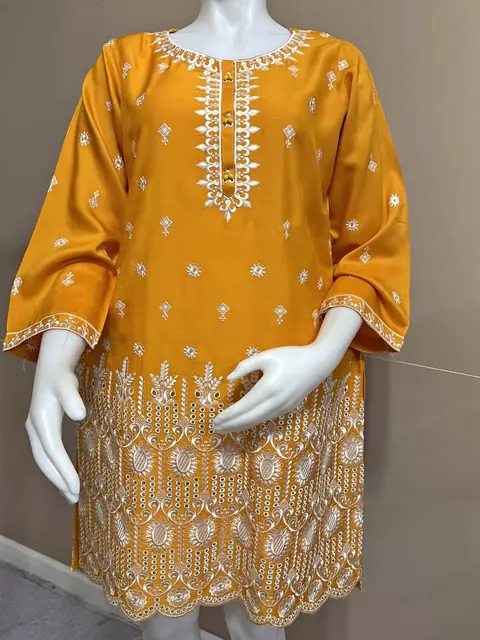
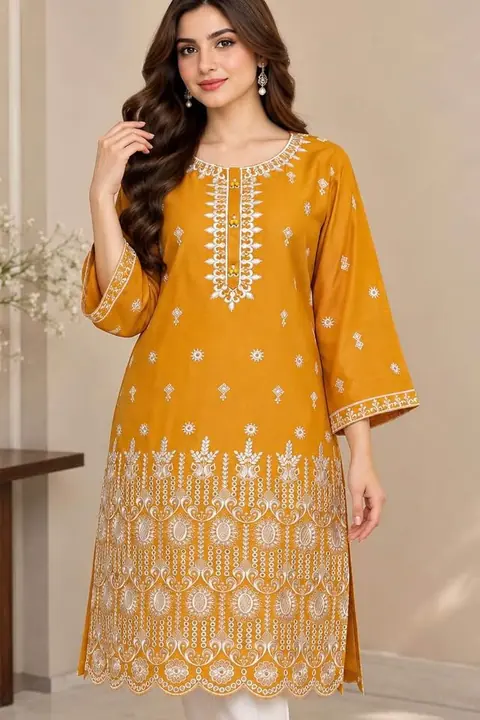
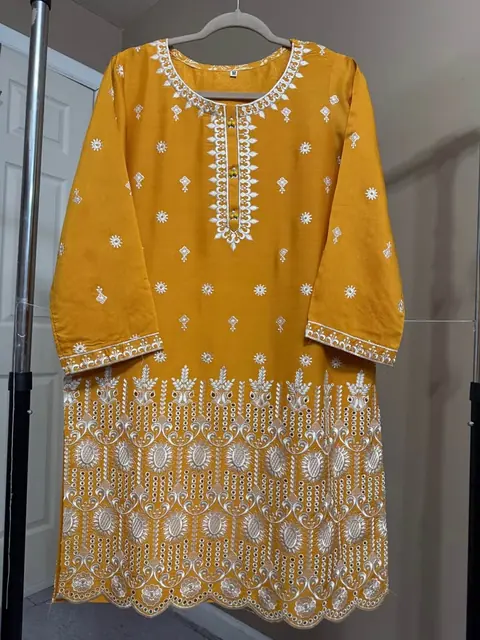
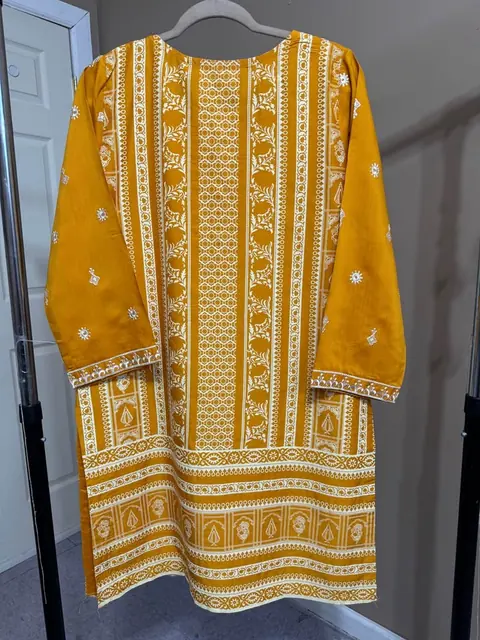
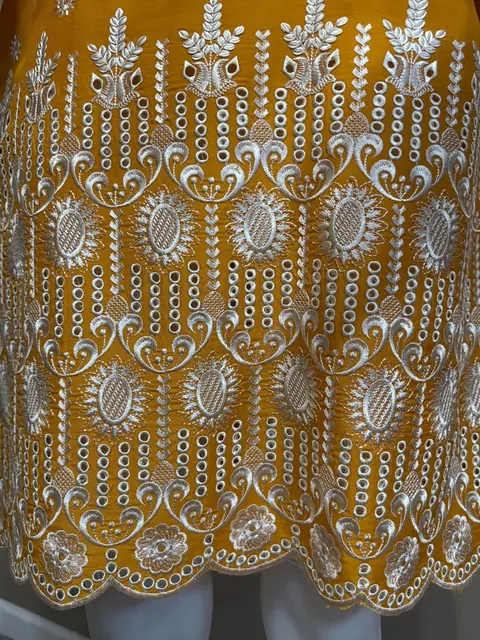
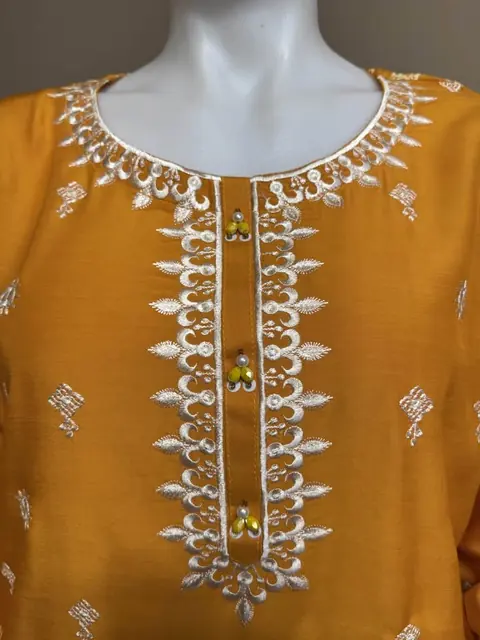
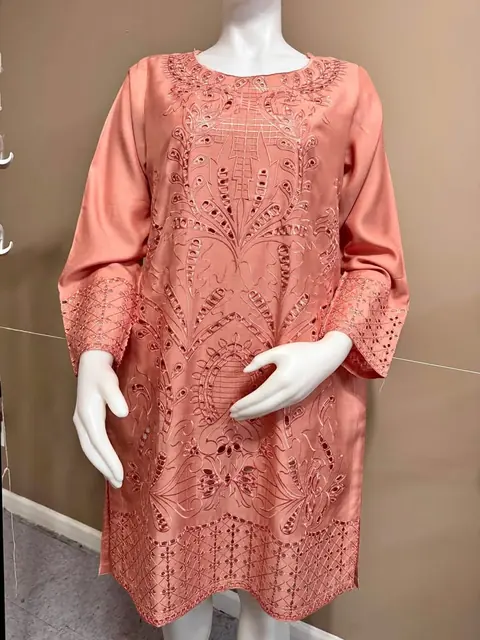
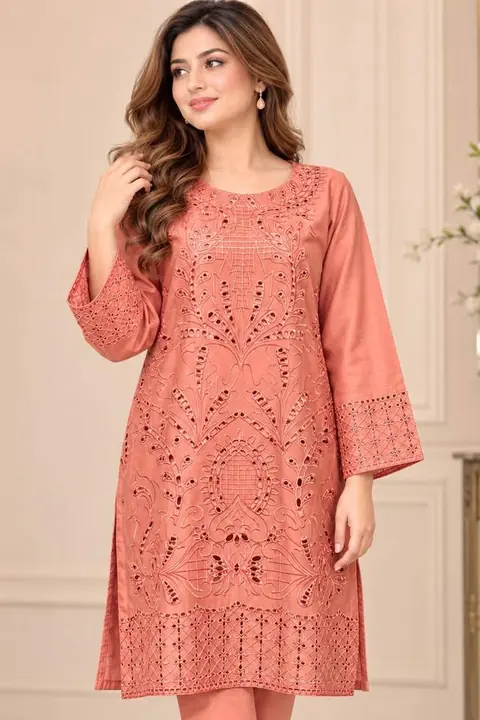
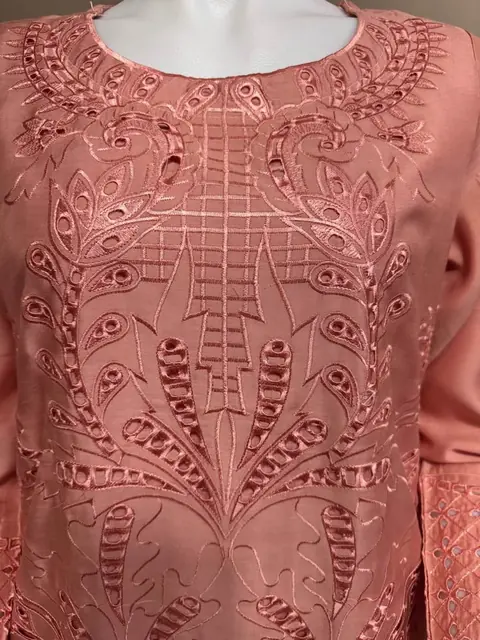
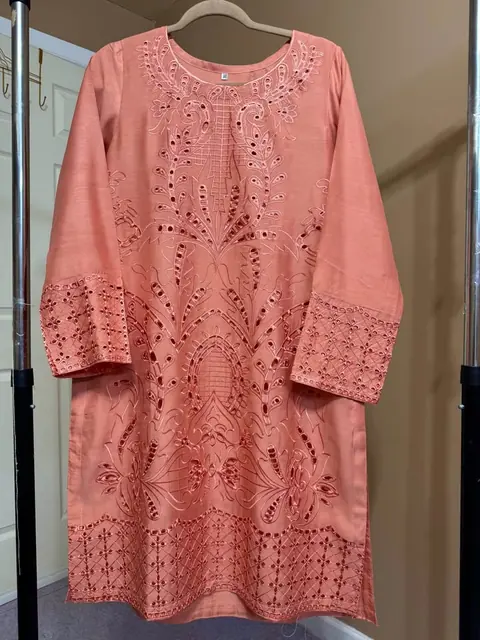
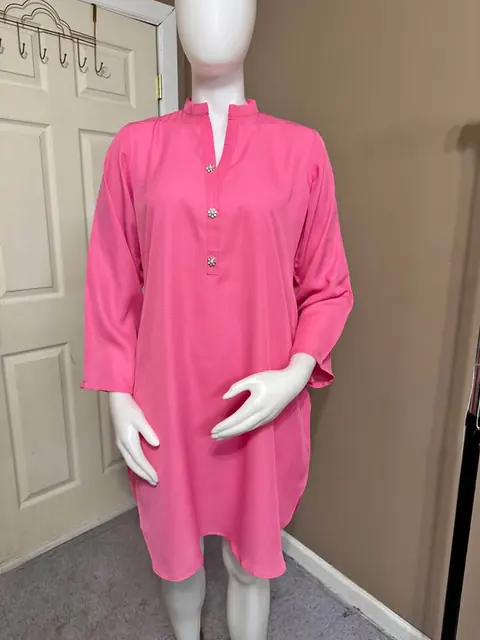
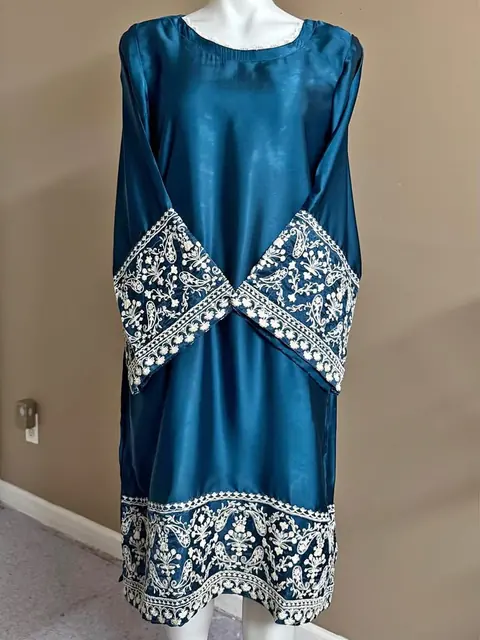
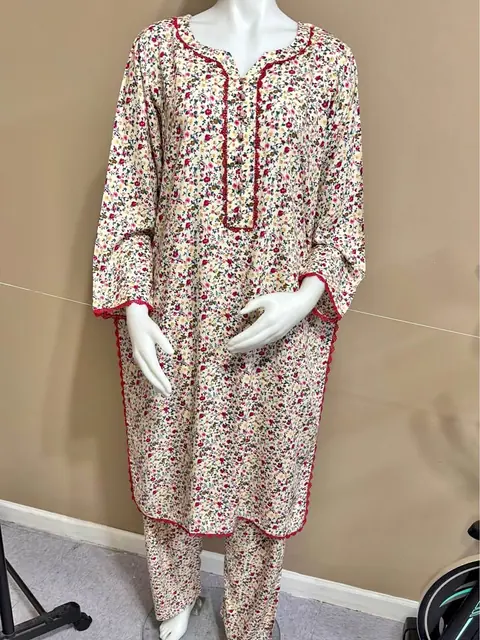
The chikankari pieces in Shagufta's shop are viscose kurtis with chikankari embroidery, and one adds sequin work, which makes it dressy enough for an evening. If you want to look at the stitches closely, ask her on WhatsApp for close-up photos or a short video before you order.
How to wear a chikankari kurti
Keep the rest of the outfit simple so the embroidery is the star. White and pastel chikankari is cool on hot days, and color-on-color work, like white on pale blue or pink on pink, is soft and easy to match.
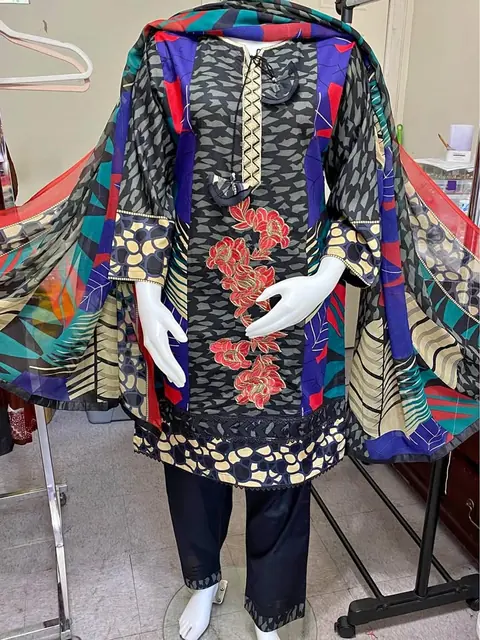
Silver, oxidized jewelry and pearls suit the soft look better than heavy gold. If the kurti is heavily worked, skip the dupatta or choose a plain chiffon one in a matching shade; if it is simple, a printed or embroidered dupatta adds color. Some ideas:
- Everyday: a knee-length chikankari piece with straight jeans or white cotton pants and flat sandals.
- Office: a pastel kurti with cigarette pants or straight trousers, small earrings and loafers or juttis.
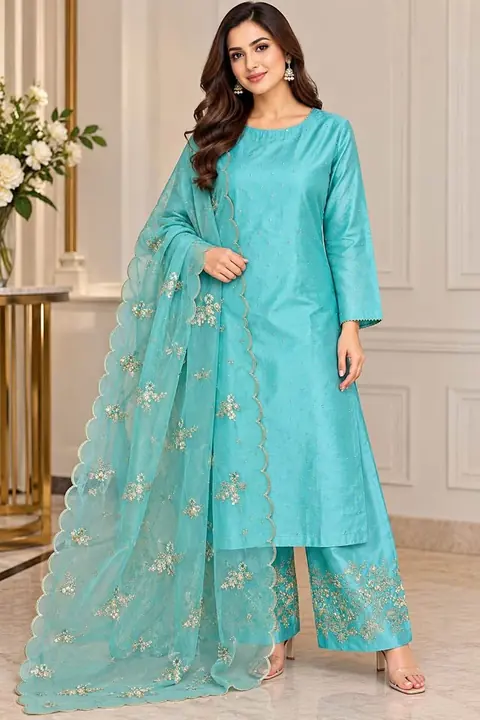
- Summer parties and Eid: palazzos or gharara pants, an organza or chiffon dupatta and silver jhumkas.
- Mehndi or haldi: a yellow or mint kurti with a bright dupatta and lots of bangles.
What to wear under a sheer chikankari kurti
Chikankari is often worked on thin fabric, and shadow work needs sheer cloth to show. Some kurtis come with a matching slip, and some are half lined at the front, like one of Shagufta's viscose pieces. If a listing doesn't mention lining, ask before you order.
If your kurti is see-through, wear one of these underneath:
- A long camisole or slip in a shade close to your skin tone; it disappears under white and pastels.
- A slip in the same color as the kurti for deeper colors.
- A full-length inner that ends just above the kurti hem if the whole piece is sheer.
- Leggings, pants or palazzos that are not sheer themselves, since the side slits will show them.
Caring for chikankari
Treat the embroidery gently: hand wash in cold water with a mild liquid detergent, swish rather than scrub, and don't wring. Roll the kurti in a towel to press out the water, dry it in the shade inside out, and iron it on the reverse over a towel so the knots stay raised. Pieces with sequins or heavy work can go to the dry cleaner. The washing guide has the full routine.
Shop the pieces
Updated October 2026